Alongside generating fundraising revenue, leading your employees and volunteers, and enacting your mission in the community, an essential part of managing a nonprofit is remaining compliant with the legal requirements for nonprofits. While many compliance guidelines will depend on your organization’s location, filing an annual Form 990 with the IRS is a requirement for nearly all 501(c)(3) nonprofits in the U.S.
In this article, we’ll explore the ins and outs of Form 990s, including the different types, staff and external team members you’ll need to consult with, and when these forms are due. Let’s dive in!
What is Form 990?
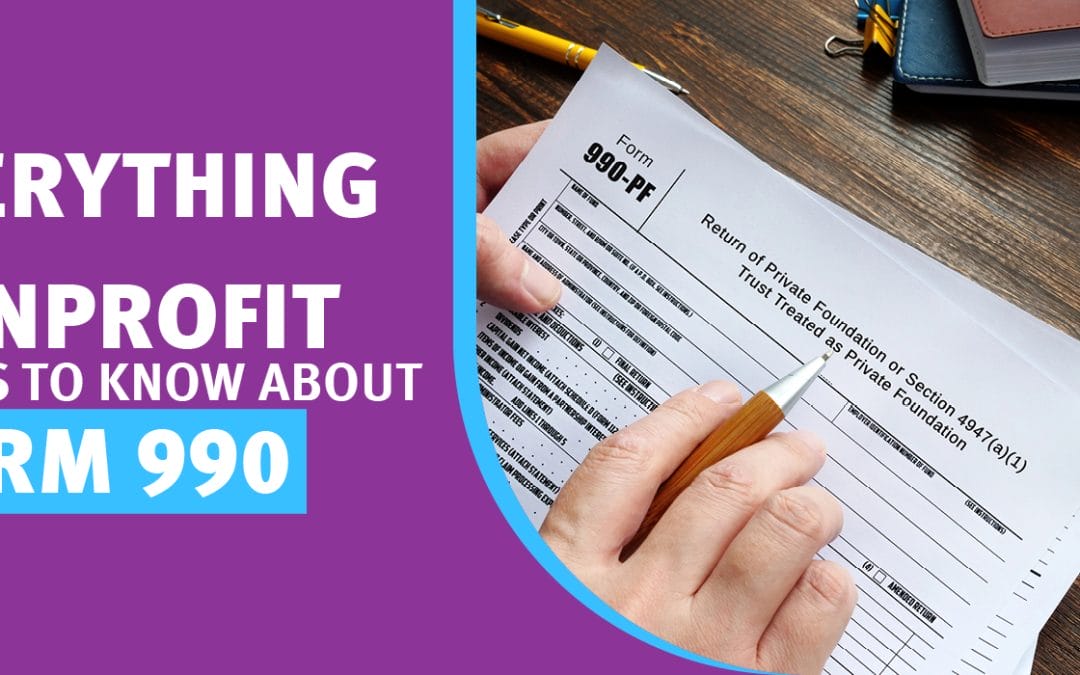
IRS Form 990, according to Jitasa, is a “tax return document that exempt organizations complete each year and file with the IRS.” Once your organization has been granted tax-exempt status, Form 990s show the government and other stakeholders that you’re staying compliant with the requirements of tax exemption year-after-year.
Due to organizations varying in size and complexity, from newly-created nonprofits to national network organizations, the IRS has four different types of Form 990s, which are covered in the table below.
Types of Form 990s
| Form 990-N (e-postcard) | Gross Receipts < $50,000 |
|
| Form 990-EZ | Gross Receipts < $200,000
Total Assets < $500,000 |
|
| Full Form 990 | $200,000 ≥ Gross Receipts
$500,000 ≥ Total Assets |
|
| Form 990-PF | Private foundations |
|
Why is Form 990 important?
Most significantly, Form 990s are legally required. They report financial information to the government, which allows oversight and holds nonprofits accountable. This measure is in place to discourage fraud, providing a paper trail that the IRS can review. Information provided or lack of information provided (suspicious unrelated business income, excessive compensation for staff members, discrepancies between fundraising income and expenses, incomplete sections, etc.) can cause the IRS to audit your nonprofit.
There are consequences for not filing Form 990 or filing late. If a nonprofit doesn’t file Form 990s for three consecutive years, that organization risks losing its tax-exempt status. Late filings also sometimes trigger audits and (except for Form 990-N) come with fees. On top of the legal implications, failing to file Form 990 is a major red flag to grantmakers, donors, and other stakeholders who expect financial transparency and proper management from the organizations they make large contributions to.
Form 990s are publicly available, which is how donors and other interested parties can see them. For nonprofits in good standing, this is a foundational way to demonstrate your trustworthiness.
Alongside your other fundraising staff training, have your development team review the previous year’s Form 990 so they can speak to the information is a good idea. Additionally, although Form 990s are available on the IRS website and through third-party sites like Candid, consider linking to recent returns on your organization’s website so they’re easy for supporters to find.
When should my nonprofit file its Form 990?
Your Form 990 deadline is based on your nonprofit’s fiscal year. The 15th day of the fifth month after your fiscal year ends is your Form 990 deadline. For instance, if your nonprofit’s fiscal year ends on June 30th, your deadline will be November 15. If your nonprofit runs on a calendar fiscal year, it would be May 15.
As we mentioned previously, there are penalties for filing late, but you can request an extension. Filing a Form 8868 will grant a six-month extension for filing a Form 990. Form 990-Ns are not subject to late filing penalties, although the loss of tax-exempt status for nonprofits that fail to file for three years in a row still applies.
Who is involved in Form 990 filing?
A good way to ensure your nonprofit’s return is filed on time is to assign ownership of the task to a specific person. This will likely be an accountant or whoever manages your organization’s other financial reporting.
Here is a breakdown of the different roles that may be involved:
-
- Financial staff members: Your nonprofit may or may not have all of the following roles (and may have one person who handles all of these responsibilities).
- Accountants are responsible for analyzing data and creating reports that support the overall financial health and sustainability of an organization, including taking the lead on Form 990 completion and submission.
- A CFO (Chief Financial Officer) manages the financial strategy of an organization and may consult on Form 990 filing.
- Bookkeepers manage day-to-day financial operations and would support the accountant by providing the relevant data and information.
- Nonprofit board: Having your board review your Form 990 is a best practice that you should document on the return. Many boards have a treasurer who takes charge of financial processes and has experience in the field, so keep that in mind when you’re recruiting and researching potential board members.
- Financial staff members: Your nonprofit may or may not have all of the following roles (and may have one person who handles all of these responsibilities).
- Executive team members: Because Form 990 also requires information on mission and operational accomplishments, you may need to consult with leaders within your organization for context on decision-making and the impacts of your nonprofit’s activities.
How should my nonprofit prepare its Form 990?
Whether you’re filing in-house or working with an accounting firm, you’ll need to gather all of the relevant financial information from the fiscal year. This includes:
-
- Revenue: This encompasses program revenue, earned income, and fundraising income, from cash contributions to non-monetary gifts like real estate or stocks. (FreeWill’s guide to stock gifts recommends creating an acceptance policy that can help guide your reporting process if you accept these gifts.)
- Expenses: This covers fundraising costs, money spent on programs, and administrative expenditures. By compiling a Statement of Functional Expense, your organization will have access to all of this information. Plus, it will be organized using the same categories as the Form 990, making filing even easier.
- Organizational Details: These include your address, mission, employer ID number, top five highest-paid employees, etc.
- Governance Policies: These refer to any policies your board has issued, like a conflict of interest policy or staff compensation policy.
The extent of information needed will depend on which type of Form 990 you file. You can find more tips on the IRS website, and a nonprofit tax professional can help you identify exactly what information is needed for your unique organization.
The Form 990 is your nonprofit’s federal tax return, so you’ll also need to confirm your state tax filing requirements. Some states accept Form 990 as your state tax return, but some have specific additional forms. Remember to issue Form W2s to employees and Form 1099s for any contract work, too.
By practicing good financial management throughout the year (recording all relevant information, using dedicated accounting software, making and following a budget, etc.), filing your Form 990 won’t be too taxing.
About the Author

Jon Osterburg
Since joining Jitasa in 2010, Jon Osterburg has helped hundreds of nonprofits around the world effectively manage their finances through tailored, outsourced bookkeeping and accounting services. He currently serves as Jitasa’s Chief Operating Officer, is a member of two nonprofit boards, and has earned a certificate for Executive Education from the Yale School of Management.