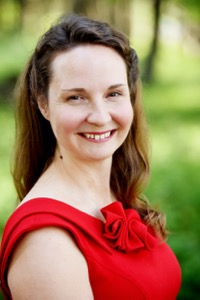
 Today’s guest post on capital campaigns in rural communities is from Quadrant 3 Leadership Coach Chany Reon Ockert, CFRE. Chany owns Small Town Capital Campaigns. She coaches small town and rural nonprofits through their capital campaigns. She also hosts the Reflections in Generosity podcast, a great weekly, 5-minute podcast that grounds listeners in the right mindset for capital campaigns. She can be reached through ServingNonprofits.com.
Chany also leads the Nonprofit Academy training “Ready, Set, Plan: Preparing for a Capital Campaign in Your Small Town.”
Planning a Capital Campaign in a Small Town?
by Chany Reon Ockert, CFRE
Are we too small? Do we have enough donors? Will a capital campaign work for us? These are common questions from nonprofit leaders in small towns when exploring a large-scale capital campaign. Yes, capital campaigns work in small towns and rural areas, and the proven best practices still apply. However, before those practices are implemented, they need some adjustments to be successful.
What is Rural?
First of all, defining a rural area is surprisingly challenging. For some funding sources, the definition is 5,000 or fewer people. For other sources, the definition is non-metropolitan; aka, not urban. It’s also a matter of self-conception. I have coached nonprofits in towns from 300 to 100,000 that have considered themselves as rural.
Two Realities of Rural Fundraising: Connectivity and Fluidity
Two primary reasons that adaptations in campaign practices in rural areas are needed are connectivity and fluidity. As a blessing or a curse, individuals are more connected in a rural area. Small-town gossip and nosy neighbors are real. Anonymity is rare. And, news travels fast. Further, residents in rural areas are connected in multiple ways. Think of it as a form of 6 degrees of Kevin Bacon. In the case of a rural area, it’s 6 degrees of connection; that is, a person can find multiple ways they are connected to other people in the town. For example, an elected official was publicly supportive of a homeless shelter because his family had used the services 20 years earlier, the staff still knew his family, and he connected the organization to other donors. This is the norm in rural communities. Urban fundraising strategies, on the other hand, may assume more difficulty in finding connections, more tenuous relationships, and less available information.
There is also a fluidity of life in a rural town. It is normal to see a Board member, a campaign committee volunteer, or a potential major donor, all unexpectedly out in the community, in the grocery store, for instance. In the case of a Board member or volunteer, an Executive Director may be hesitant to address poor behavior or to confront a conflict because they are likely to run into that person unexpectedly. In the case of a potential major donor, a well-defined moves management strategy can be disrupted in a moment when the Executive Director is seated next to that donor at the café, and the donor wants to discuss the project and their gift right then, even though the campaign is still in the planning phase and the budget isn’t complete. This fluidity forces campaign strategies to be more flexible.
Yet, the fluidity has great benefits. When it is difficult to schedule a meeting, these “run-in” moments can move the scheduling process forward and they can keep the organization top of mind. For one client, every time the Executive Director saw the donor in the grocery store, the donor would send the organization a $20,000 check the next day. Further, this fluidity extends to all of the Board members and campaign committee members encountering donors, so with good communication in the campaign, this feature of rural communities is a strength in cultivating relationships with potential donors.
Three Practical Fundraising Strategies that Fit Fundraising in Rural Communities
There are three practical strategies, building on the connectivity and fluidity of rural communities, that can be used to adapt best practices in capital campaigns.
#1: Involve Key Donors and Volunteers Earlier
The connectivity and fluidity of relationships make it essential to involve key donors and volunteers earlier in the planning process. For example, a zoning or building permit application might go unnoticed in a larger area; in a small town, the news of the application is likely to be discussed in the coffee shop before it even goes to a hearing. Therefore, when an organization is planning a campaign, it’s important to engage key donors and volunteers earlier.
I’ve experienced the painful consequences of not doing this. When a nonprofit hit a roadblock during the construction planning for a capital campaign, the issue was discussed among the staff and Executive Committee of the Board. And, unbeknownst to us, it was also being discussed by community leaders and major donors because one of the Executive Committee members, when tipsy, shared some of the details at a small house party among friends. The rest of the Board members and capital campaign committee members felt blindsided when they heard about the roadblock from a community leader who wasn’t even present at the house party. This experience, along with application gossip, demonstrates the necessity of bringing key donors and volunteers far earlier to the table throughout the initial planning stages and during campaign roadblocks. These key donors and volunteers then become your advocates and correctors of misinformation in the hearing rooms, the coffee shops, and throughout your community.
#2: Adapt Your Planning with the Insights from Thinking Partners
Beyond key donors and volunteers staying informed about the campaign, they can become vital thinking partners. These thinking partners may have knowledge of other projects being planned in the community. They can bring in ideas from other organizations to inform the planning. Or they can bring an outside perspective on how the project may be perceived in the community. As these insights from the thinking partners are incorporated, these donors and volunteers become more engaged in the project and deepen their commitment to ensure the campaign is successful.
One client had outgrown their facility 10 years prior and relied on a “make-do” mentality to provide services. During the campaign readiness planning, the Executive Director brought in a retired, respected community leader as a thinking partner. This thinking partner articulated how the “make-do” mentality would sit with the future campaign donors once the new facility was built. The Executive Director took that insight, created a quicker transition plan to fully utilize the building, and added the associated capacity-building costs to the campaign budget. Thinking partners can also report the community gossip they are hearing so that the Executive Director, staff, and Board members aren’t caught unaware.
#3: Wealth Screening Is More Effective Around a Kitchen Table
One common concern is asking for the right amount. Wealth screening has been a standard capital campaign tool, and many donor databases have that feature as an integration. In rural areas, however, these online wealth screening services are often less effective. This is partly due to the wealth in rural areas not being captured accurately and this is partly due to the lack of donor giving data. In some rural areas, we talk about the “view tax” where beautiful scenery can over-inflate the real estate values. The reality of the saying “house rich, cash poor” can skew the wealth scores. In addition, if a nonprofit publishes a donor list online, it is less common in rural areas for it to include giving tiers. Because of these factors, a more accurate way for wealth screening is through brainstorming a donor’s giving capacity with Board members, former Board members, campaign volunteers, and key donors.
While it doesn’t have to happen around an actual kitchen table, these conversations begin with a list of 10 to 20 potential donors. Those gathered are asked a series of questions that pull out the local knowledge in the room. Who is selling their business? Will the heirs take over the farm? To what other projects might this donor give? What is their likely giving range to this project? Who has the best connection? In addition, as the volunteers and donors begin discussing the names and community gossip, they will often think of more potential donors. This process is then repeated throughout the campaign. With ongoing conversations, information gathered “around the kitchen table” may be more accurate than traditional wealth screening.
Small Communities, Big Impacts
Capital campaigns in small towns and rural areas can bring a greater percentage of the community together to solve a common problem or to create something new and good with a new or renovated building. These campaigns grow the giving muscles among donors who expand their generosity to meet the greater vision for the community and for other nonprofit campaigns. Once the space is built, the new programs offered in the new space may serve a higher percentage of people per capita. And the change in the daily lives of our communities is often easier to see. With practical adaptations to the planning, capital campaigns truly strengthen the fabric of the community and that strength has positive impact on donors, community members, and other nonprofits for decades.